
Worship is more than singing songs in church. Worship is a lifestyle of reverence, devotion, surrender, and love toward God. It is the posture of a heart that recognizes God’s greatness and responds with obedience, gratitude, intimacy, and praise. Many believers worship occasionally, but God desires worshippers who cultivate a consistent lifestyle of worship. A …

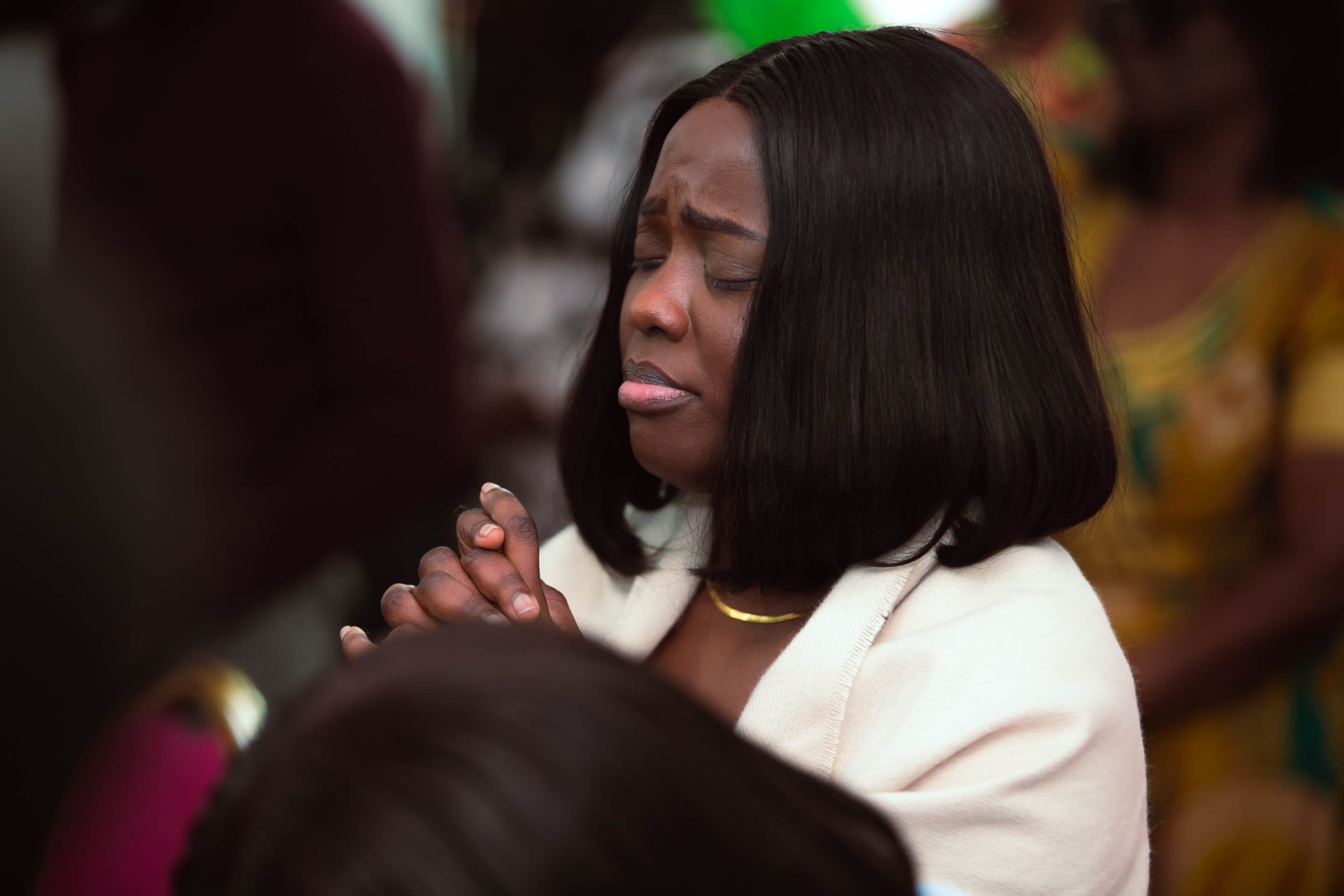
Worship is more than singing songs in church. Worship is a lifestyle of reverence, devotion, surrender, and love toward God. It is the posture of a heart that recognizes God’s greatness and responds with obedience, gratitude, intimacy, and praise.
Many believers worship occasionally, but God desires worshippers who cultivate a consistent lifestyle of worship.
A habit of worship does not happen accidentally. It is developed intentionally through daily pursuit of God.
In a world filled with distractions, pressure, entertainment, and busyness, believers must learn how to build a life centered around the presence of God.
Anchor Text: Psalm 34:1 • Supporting Text: John 4:23–24; Hebrews 13:15; Daniel 6:10; Psalm 63:1–4; Romans 12:1
INTRODUCTION — “What You Do Daily, You Become”
Turn with me to the Book of Psalms, chapter thirty-four, verse one. David, the man after God’s own heart, writes:
“I will bless the Lord at all times; his praise shall continually be in my mouth.” (Psalm 34:1, KJV)
Lift your voice and tell the Lord this morning, “I will bless You at all times!”
Now here is something you may not know about this psalm. The title above it tells us David wrote it “when he pretended to be insane before Abimelech, who drove him away.” In other words, David wrote these words about continual praise during one of the most humiliating, frightening, unstable seasons of his life — when he was on the run from Saul, when he had fled to enemy territory, when he had to fake madness to save his own life. And it was out of that that he said: “I will bless the Lord at all times… his praise shall continually be in my mouth.”
Church, hear me. David did not say “I will bless the Lord when I feel like it.” He said “at all times.” He did not say “His praise shall occasionally cross my lips.” He said “continually.” What David is describing is not a mood. It is not a Sunday event. It is a habit — a settled, established, continual lifestyle of worship that runs no matter what the circumstances are doing.
And that is exactly what so many believers are missing. We know how to attend worship. The question this morning is whether we have learned to live worship. Because there is a vast difference between a person who goes to a worship service and a person who has become a worshipper.
Here is a truth as old as time: what you do daily, you become. Habits are not what you do once; they are what you do repeatedly until they do you. The athlete is made in the daily training. The musician is made in the daily practice. And the worshipper — the true, deep, God-pleasing worshipper — is made in the daily, continual, deliberate cultivation of worship until it becomes as natural as breathing.
So this morning I am not merely going to preach about worship. I am going to show you, by the Word of God, how to develop the habit of worship. I want to give you four practical, scriptural keys:
First, Settle the Decision — worship begins with a fixed heart. Second, Set the Appointment — worship grows by intentional rhythm. Third, Sacrifice the Convenience — worship costs something. Fourth, Sustain Through the Storm — worship that holds in hard times.
If you will receive these four keys and put them to work, I promise you on the authority of the Word: you will not leave here merely inspired — you will leave here equipped to become a worshipper.
I. SETTLE THE DECISION — Worship Begins With a Fixed Heart
Every habit begins not with an action but with a decision. And so the first key to developing a habit of worship is to settle, once and for all, that you will worship. Look at David’s language again: “I will bless the Lord at all times.” That is the language of decision. That is the language of the will, not the language of the emotions.
Most people’s worship rises and falls with their feelings. When they feel blessed, they bless God. When they feel low, they go silent. But a worshipper has settled the matter in advance: “I will bless the Lord at all times” — on the mountain and in the valley, in plenty and in want, when I feel it and when I don’t.
Listen to how David fixes his heart in another psalm:
“My heart is steadfast, O God, my heart is steadfast; I will sing and make music. Awake, my soul!” (Psalm 57:7–8, NIV)
“My heart is steadfast” — fixed, established, immovable. And notice this was also written, according to the title, “when he had fled from Saul into the cave.” A man hiding in a cave with a fixed heart of worship will outlast a man on a throne with a wandering one.
But here is the foundation underneath the decision. Jesus told the woman at the well:
“Yet a time is coming and has now come when the true worshipers will worship the Father in the Spirit and in truth, for they are the kind of worshipers the Father seeks. God is spirit, and his worshipers must worship in the Spirit and in truth.” (John 4:23–24, NIV)
Stop and receive that: the Father seeks worshippers. Of all the things the all-sufficient God could seek, He is searching the earth for worshippers. So when you decide to become one, you are not begging for God’s attention — you are answering His search. You are becoming the very thing the heart of God is looking for.
And mark the standard: “in the Spirit and in truth.” Worship is not first about the song; it is about the Spirit. It is not first about the style; it is about the truth. True worship engages the inner man — your spirit responding to His Spirit — and it is grounded in truth, in the knowledge of who God really is. So the decision is not, “I will sing more songs.” The decision is, “I will become a person whose spirit is continually turned toward God.”
So I ask you this morning, before we go one step further: Have you settled it? Have you made the decision — not as a feeling, but as an act of the will — that you are going to be a worshipper? The habit cannot be built until the decision is made. Settle it today.
II. SET THE APPOINTMENT — Worship Grows by Intentional Rhythm
A decision without a rhythm will not survive. This is where so many sincere believers fail. They decide to worship, but they leave it to chance — and what is left to chance rarely happens. So the second key is this: set the appointment. Worship grows by intentional, scheduled rhythm.
Let me show you the greatest example of holy habit in all of Scripture. The kingdom has just issued a decree that anyone who prays to any god but the king will be thrown to the lions. And here is what the man Daniel does:
“Now when Daniel learned that the decree had been published, he went home to his upstairs room where the windows opened toward Jerusalem. Three times a day he got down on his knees and prayed, giving thanks to his God, just as he had done before.” (Daniel 6:10, NIV)
Look at three things in that one verse. First, Daniel had a place — “his upstairs room.” Second, Daniel had a time — “three times a day.” Third — and this is the phrase that built the man — “just as he had done before.” This was not a panic-prayer in a crisis. This was a habit so deeply established that even a death threat could not interrupt the rhythm. Daniel did not develop his worship habit on the day of the decree; he simply continued the habit he had been building for decades. The habit that saved his witness was set long before the test arrived.
David, too, had a set time:
“In the morning, Lord, you hear my voice; in the morning I lay my requests before you and wait expectantly.” (Psalm 5:3, NIV)
And again:
“Evening, and morning, and at noon, will I pray, and cry aloud: and he shall hear my voice.” (Psalm 55:17, KJV)
Morning, noon, and evening. These were men who built worship into the architecture of their day. They did not wait for the mood to strike. They set the appointment and they kept it.
So practically, beloved — and I want you to write this on your heart: choose a time and choose a place. Decide that, like Daniel, you will have an “upstairs room,” a set spot where you meet God. Decide that, like David, there is a morning hour where God hears your voice first, before the noise of the world drowns it out. Hear David’s hunger:
“You, God, are my God, earnestly I seek you; I thirst for you, my whole being longs for you… I will praise you as long as I live, and in your name I will lift up my hands.” (Psalm 63:1, 4, NIV)
That psalm, too, was written “in the Desert of Judah” — in a dry, hard place. A worshipper with a set rhythm can find water in a desert.
Understand the principle of habit: in the beginning you will have to drive the rhythm, but in time the rhythm will start to carry you. The first week of an early-morning altar will feel like work. But keep the appointment, day after day, and there will come a morning when your spirit wakes up hungry for the place where you meet God. That is the habit forming. Set the appointment, and keep it until it keeps you.
III. SACRIFICE THE CONVENIENCE — Worship That Costs Something
Now I must tell you the truth: worship that costs you nothing will accomplish nothing. The third key to developing a habit of worship is sacrifice — the willingness to give up convenience, comfort, and self for the sake of worship.
Hear the New Testament definition of worship:
“Therefore, I urge you, brothers and sisters, in view of God’s mercy, to offer your bodies as a living sacrifice, holy and pleasing to God—this is your true and proper worship.” (Romans 12:1, NIV)
A living sacrifice. That is the heart of biblical worship. The problem with a living sacrifice, as the old preachers said, is that it keeps crawling off the altar. Worship costs you the right to sleep in. It costs you the right to be too busy. It costs you the right to give God only your leftover time and leftover energy. To develop the habit, you must be willing to lay your convenience on the altar.
Listen to the writer of Hebrews:
“Through Jesus, therefore, let us continually offer to God a sacrifice of praise—the fruit of lips that openly profess his name.” (Hebrews 13:15, NIV)
Notice the two words again — “continually” and “sacrifice.” It is called a sacrifice of praise precisely because there are days when praise does not come cheap. When everything is wonderful, praise is easy and costs little. But when the diagnosis is bad, when the money is short, when the heart is breaking — to lift your hands and bless God then — that is a sacrifice. And it is the sacrifice that pleases Him most.
Hear the resolve of the prophet Habakkuk:
“Though the fig tree does not bud and there are no grapes on the vines, though the olive crop fails and the fields produce no food… yet I will rejoice in the Lord, I will be joyful in God my Savior.” (Habakkuk 3:17–18, NIV)
“Yet I will rejoice.” That little word yet is the language of sacrificial worship. Everything has failed — yet I will worship. That is a worshipper who has learned to sacrifice convenience.
And remember King David’s principle when he was offered a free threshing floor and free oxen for sacrifice. He refused. He said:
“I will not sacrifice to the Lord my God burnt offerings that cost me nothing.” (2 Samuel 24:24, NIV)
A worshipper who will not be inconvenienced has not yet learned to worship. So I challenge you today: be willing to lose the sleep, give up the convenience, lay down the comfort. Bring God a sacrifice that actually costs you something. That is where the habit gets its depth.
IV. SUSTAIN THROUGH THE STORM — Worship That Holds in Hard Times
Here is the final key, and it is the test of whether the habit is real: sustain your worship through the storm. Anybody can worship in the sunshine. The mark of a developed habit is worship that holds when the storm hits.
Let me take you to a midnight prison cell in the city of Philippi. Paul and Silas have been falsely accused, stripped, beaten with rods, and locked in the inner dungeon with their feet in stocks. By every natural measure, this is a night to complain, to despair, to lose heart. But watch what habit produces under pressure:
“About midnight Paul and Silas were praying and singing hymns to God, and the other prisoners were listening to them. Suddenly there was such a violent earthquake that the foundations of the prison were shaken. At once all the prison doors flew open, and everyone’s chains came loose.” (Acts 16:25–26, NIV)
At midnight — the darkest hour — they were singing. Where did that come from? You do not produce midnight worship in the middle of a crisis if you have not built the habit in the light of day. Paul and Silas worshipped in prison because worship was already in them before they ever entered the prison. The habit you build in calm becomes the weapon you wield in the storm.
And look what worship in the storm released — an earthquake, open doors, and loosened chains. Why? Because of a truth David revealed:
“But thou art holy, O thou that inhabitest the praises of Israel.” (Psalm 22:3, KJV)
God inhabits — He is enthroned upon — the praises of His people. When you worship, you are not merely making noise; you are building a throne, and the King comes and sits down in the midst of your circumstance. That is why worship in the storm shakes foundations. The atmosphere where God is enthroned cannot stay the same.
This is the same lesson as our anchor text — David writing “at all times” while pretending to be insane before the enemy. The habit was strong enough to hold in the worst place. And remember King Jehoshaphat in 2 Chronicles 20: surrounded by three armies, he sent the worshippers out in front of the soldiers, and “as they began to sing and praise, the Lord set ambushes” against the enemy and the battle was won (2 Chronicles 20:21–22).
So when the storm comes — and it will come — do not abandon the habit. Sustain it. Worship is not only the celebration of the victory; very often worship is the weapon that wins it. The believer who has developed a habit of worship walks into the storm already armed.
CONCLUSION & ALTAR CALL — Become What the Father Is Seeking
Let me bring it home.
The Father is seeking worshippers. Not visitors to a worship service — worshippers. And this morning He is looking across this congregation, and the question is whether He will find one in you.
A habit of worship is not built in a single dramatic moment. It is built the way every habit is built — by decision, by rhythm, by sacrifice, and by faithfulness through the storm. Settle the decision: “I will bless the Lord at all times.” Set the appointment: like Daniel, find your upstairs room and your set hour. Sacrifice the convenience: bring God an offering that costs you something. And sustain through the storm: keep singing at midnight until the foundations shake.
To the believer who has been living on Sunday-only worship — come to this altar this morning and let God turn an event into a lifestyle. Make the decision here, now, that you will become a daily worshipper.
To the one in the storm right now — the one who has gone silent because the pain stole your song — let the Holy Spirit restore the sacrifice of praise to your lips. Lift your hands and offer the yet of Habakkuk: “yet I will rejoice in the Lord.”
And to the one who has never truly known this God — you cannot worship a God you do not know. Come to Jesus Christ today, receive Him, and let Him put a new song in your mouth.
Don’t just attend worship, beloved. Become a worshipper. What you do daily, you become. Begin today, and keep it up, until praise is as natural to you as breathing — his praise continually in your mouth.
Let us pray.
Psalm 34:1; 57:7–8; 5:3; 55:17; 63:1–4; 22:3; John 4:23–24; Daniel 6:10; Romans 12:1; Hebrews 13:15; Habakkuk 3:17–18; 2 Samuel 24:24; Acts 16:25–26; 2 Chronicles 20:21–2
Scriptures cited:
Scriptures cited:
Psalm 34:1; 57:7–8; 5:3; 55:17; 63:1–4; 22:3; John 4:23–24; Daniel 6:10; Romans 12:1; Hebrews 13:15; Habakkuk 3:17–18; 2 Samuel 24:24; Acts 16:25–26; 2 Chronicles 20:21–2
Sign up for free class
It’s easy and free!
Tags:ChurchFamilyGodsWord






Comments
annabrown
Wow, cool post, thanks for sharing.
cmsmasters
Happy to be of service.